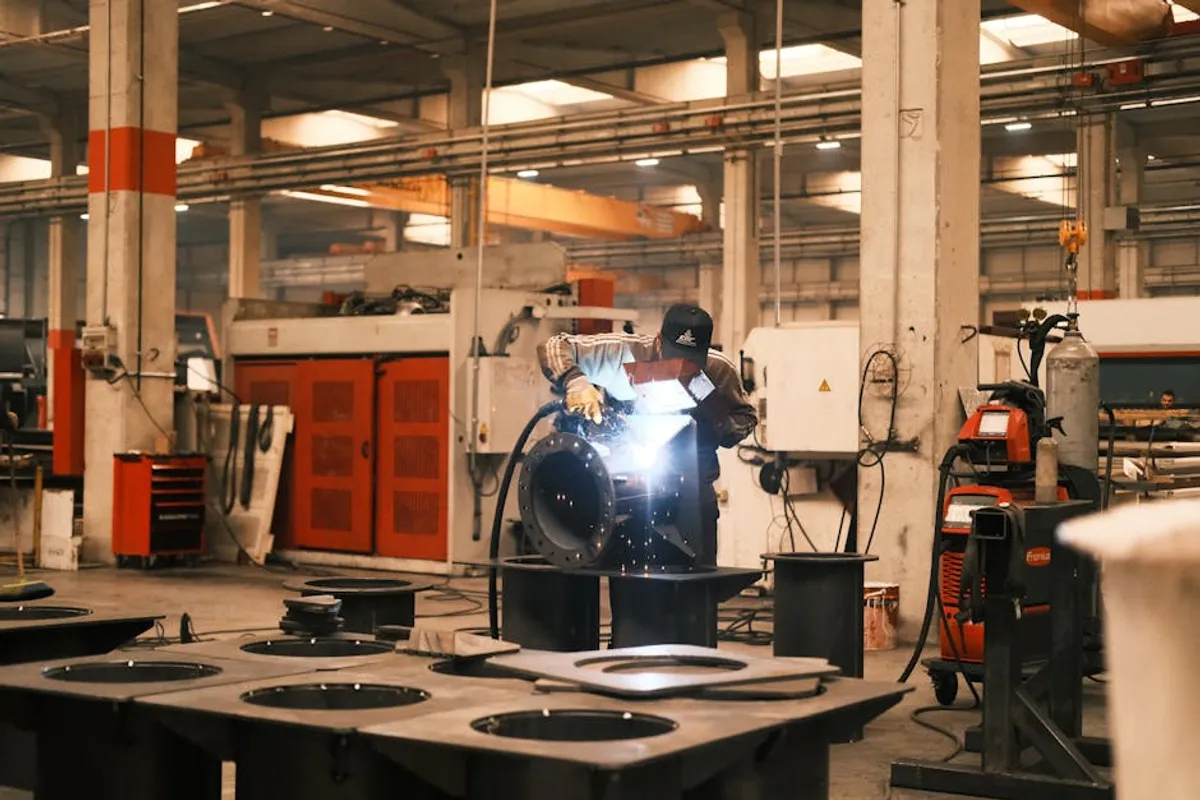
Selecting the appropriate welding method is critical for any fabrication, repair, or construction project. Each welding process offers distinct advantages and limitations regarding material compatibility, joint strength, aesthetic finish, operational cost, and required skill level. Understanding these differences before committing to a specific technique ensures structural integrity, cost efficiency, and a successful outcome. This guide details the primary types of welding, their operational specifications, typical applications, and key considerations for choosing the right process for your needs.
Shielded Metal Arc Welding (SMAW) / Stick Welding
SMAW, commonly known as stick welding, employs a consumable electrode coated in flux. An electric arc forms between the electrode and the workpiece, melting both the electrode and the base metal to create a weld pool. The flux coating disintegrates, producing a shielding gas and slag that protect the molten metal from atmospheric contamination. This slag solidifies over the weld and must be chipped off after cooling.
- Process Characteristics: Manual, uses consumable electrodes, requires chipping slag.
- Typical Applications: Heavy steel structures, construction, pipeline welding, repairs, and general fabrication. Effective outdoors and in less-than-ideal conditions due to inherent shielding.
- Materials: Carbon steels, low-alloy steels, stainless steels, cast iron.
- Specs & Considerations:
- Power Source: Both AC and DC welders are available, with DC offering a smoother arc and better control.
- Electrodes: Vary by coating type (e.g., E6010, E7018) for different penetration, strength, and positional capabilities. Diameters range from 1/16 inch to 1/4 inch.
- Material Thickness: Generally effective on materials 1/8 inch (3mm) or thicker.
- Portability: Equipment is often simple and highly portable.
- Best for: Robust welds in outdoor or dirty environments, thick materials, cost-effective initial setup.
Gas Metal Arc Welding (GMAW) / MIG Welding
MIG welding uses a continuously fed wire electrode that is melted and deposited into the weld joint. A shielding gas, typically an argon-CO2 mixture, flows around the arc and weld pool to prevent contamination. The process is semi-automatic, allowing for faster welding speeds compared to SMAW.
- Process Characteristics: Semi-automatic, continuous wire feed, requires external shielding gas.
- Typical Applications: Automotive manufacturing, general fabrication, light to medium structural work, home repairs.
- Materials: Carbon steel, stainless steel, aluminum, magnesium, copper alloys.
- Specs & Considerations:
- Wire Diameter: Common sizes range from 0.023 inch to 0.045 inch, selected based on material thickness and current.
- Shielding Gas: Critical for weld quality; choices include 100% CO2 (deeper penetration, more spatter), 75% Argon/25% CO2 (general purpose), or 100% Argon (for aluminum).
- Material Thickness: Excels on thin sheet metal up to medium plates (typically 24 gauge to 1/2 inch).
- Deposition Rate: High deposition rates contribute to faster project completion.
- Best for: High-speed welding, beginners due to ease of use, thin materials, projects requiring minimal post-weld cleaning.
Gas Tungsten Arc Welding (GTAW) / TIG Welding
TIG welding employs a non-consumable tungsten electrode to create the arc. A separate filler rod is manually fed into the weld pool, and an inert shielding gas (usually 100% argon) protects the weld area. This method offers precise control, producing high-quality, clean welds with excellent aesthetic appeal.
- Process Characteristics: Manual, non-consumable tungsten electrode, separate filler rod, requires external shielding gas.
- Typical Applications: Aerospace, medical equipment, food processing, custom fabrication, artistic metalwork, critical applications requiring high integrity welds.
- Materials: Stainless steel, aluminum, magnesium, titanium, copper alloys, exotic metals.
- Specs & Considerations:
- Power Source: AC current is essential for aluminum and magnesium, while DC is used for steel, stainless steel, and most other metals.
- Tungsten Electrode: Various types (e.g., pure, thoriated, lanthanated) and diameters (0.020 inch to 1/8 inch) for different applications.
- Shielding Gas: Typically 100% argon; helium or argon/helium mixes can be used for thicker materials or higher heat input.
- Skill Level: Requires significant operator skill and coordination.
- Best for: Precision work, thin materials, aesthetically critical welds, exotic metals, applications demanding superior weld quality.
Flux-Cored Arc Welding (FCAW)
FCAW uses a continuously fed tubular wire electrode filled with flux. This flux generates the shielding gas, and in some variations, additional external shielding gas is also used. The process is similar to MIG but offers better penetration and is more forgiving in outdoor or dirty conditions than gas-shielded MIG.
- Process Characteristics: Semi-automatic, continuous tubular wire, flux provides shielding (some require external gas).
- Typical Applications: Heavy fabrication, structural steel, construction, shipbuilding, repairs where high deposition rates are needed.
- Materials: Carbon steel, low-alloy steel, some stainless steels.
- Specs & Considerations:
- Wire Type: Self-shielded (no external gas needed) or gas-shielded (requires external CO2 or argon/CO2 mix).
- Deposition Rate: Higher than SMAW and often MIG, making it suitable for thick materials and high production.
- Portability: Self-shielded FCAW is highly portable as it doesn't require a gas cylinder.
- Smoke & Fumes: Tends to produce more smoke and fumes than other processes.
- Best for: Outdoor structural work, thick materials, high production welding, situations where portability is key and a clean finish is not the top priority.
Pro Tip: Always match your filler metal to the base metal composition for optimal strength and corrosion resistance. Consult material data sheets or welding guides to ensure compatibility, especially when joining dissimilar metals, to prevent issues like cracking or premature failure.
Choosing the Right Welding Process and Equipment
Selecting the optimal welding method involves evaluating several project-specific factors beyond just the type of metal. The choice impacts efficiency, cost, and the final quality of the work. Consider these elements:
- Material Type and Thickness: Aluminum and stainless steel often favor TIG or specific MIG setups. Thicker steels are well-suited for SMAW or FCAW due to their penetration capabilities. Thin gauge materials benefit from the precision of TIG or controlled MIG.
- Project Scale and Production Rate: For high-volume production, semi-automatic processes like MIG or FCAW offer superior speed. Manual processes like TIG, while precise, are slower and better for intricate, lower-volume work.
- Environment and Portability: Outdoor or field work often benefits from SMAW or self-shielded FCAW, which are less susceptible to wind affecting shielding gas. For shop work, MIG and TIG offer cleaner environments.
- Desired Weld Quality and Appearance: TIG welding consistently produces the cleanest, most aesthetically pleasing welds with minimal spatter. MIG offers good appearance with less effort than stick. SMAW and FCAW often require more post-weld cleaning.
- Operator Skill Level: MIG welding is generally considered the easiest for beginners to learn effectively. SMAW requires more practice for consistent results, while TIG demands significant hand-eye coordination and fine motor control.
- Budget and Setup Cost: SMAW equipment typically has the lowest initial cost. MIG setups are moderately priced, while TIG welders, especially those capable of AC/DC, represent a higher initial investment due to their complexity and precision. Factor in consumables like electrodes, wire, shielding gas, and power consumption.
Matching Weld to Project Needs
The decision on which welding type to utilize is a strategic one, directly influencing project timelines, material integrity, and overall cost. For structural components under heavy load, robust penetration and strength are paramount, often pointing to SMAW or FCAW. When working with delicate alloys or where the visual aspect of the weld is as important as its strength, TIG welding becomes indispensable. General fabrication and repair work can often leverage the speed and versatility of MIG. Always weigh the balance between initial investment, operational costs, and the specific demands of the application to ensure the chosen method aligns perfectly with project objectives.
Frequently Asked Questions
Which welding type is best for beginners?
MIG welding is generally considered the easiest for beginners to learn due to its semi-automatic nature and relatively forgiving process. It requires less hand-eye coordination than TIG or stick welding to produce functional welds.
What is the main difference between MIG and TIG welding?
MIG (GMAW) uses a continuously fed wire electrode and typically requires less skill for basic operation, offering higher deposition rates. TIG (GTAW) uses a non-consumable tungsten electrode and a separate filler rod, demanding greater precision and skill but producing superior quality and aesthetically pleasing welds, especially on thin or exotic metals.
Can I weld aluminum with a standard stick welder?
While technically possible with specialized electrodes, welding aluminum with a standard stick welder is generally not recommended. Aluminum requires AC current and specific techniques to break through its oxide layer, which TIG welding (specifically AC TIG) is uniquely suited for. MIG welding with a spool gun is also a common and effective method for aluminum.
What safety precautions are essential for all welding types?
Regardless of the welding type, essential safety precautions include wearing appropriate personal protective equipment (PPE) such as a welding helmet with the correct shade lens, flame-resistant clothing, welding gloves, and safety glasses. Ensure adequate ventilation to prevent inhalation of fumes and protect against electric shock and fire hazards.
# issues (0)
$ no issues filed yet. be the first — the form is below.